
CREEDS & CONFESSIONS: Ten Theses of Berne
As a student of religion, Christianity, and a person with two degrees in Bible (BA, MDiv), I have a working knowledge and a passing familiarity with most things about the Bible and Church. I stumbled upon this short creed and have never heard/read about it before now. If I have, I have completely forgotten it. It is important because it outlines the major differences between the Catholic and Protestant flavors of Christianity.
The first three creeds I personally would categorize as orthodox or normal creeds because they seek to define what Christianity is as a whole. There is an agenda to them, but the agenda is the uplifting of the whole Church universally. Tis my opinion.
This creed, the Ten Theses of Berne (also spelled Bern… no ‘e’), strikes me differently. First, it was produced in 1528 which is about 1000 years after the Chalcedonian Creed. One could term this a “modern” creed keeping in mind that I am writing from a post-modern post-Christian culture. Second, the flavor of the creed states what it is against rather than defining doctrine for the masses. It feels different, negative, and offensive.
The Theses of Berne were born in the Swiss-German area in Europe in a town where Catholic and Protestant ideas were in tension. In 1523, the Roman Catholic factions of Berne forbade the preaching of Protestantism. From what I can tell, the Reformers went around the restrictions by basing all of their teachings on the Bible (shouldn’t everyone do that?) in order to sidestep the political-religious restrictions.
On January 6, 1528, the Ten Theses of Berne were presented in the town council of Berne. These ideas were affirmed.
DEEPER INTO THE TEN THESES OF BERNE
The creed points out at its beginning that the “voice of strangers” is not something to be listened to. Based on the context, “the strangers” must be Catholics.
What are the Theses of Berne against? The ten are listed in the image above, but here is my summary:
Nope to Pope: The theses rejected the authority of the pope over the Church, emphasizing that Christ alone is the Head of the Church. The theses also later decry the massive bureaucratic engine that was/is the Catholic Church.
Pass on the Mass: They denied the Catholic understanding of the Mass as a sacrificial act, arguing instead that it is a commemoration of Christ’s one-time sacrifice on the cross. The works included for the mass and other rituals was seen as a sinful substitution of the death of Christ.
Just say “No” to Transubstantiation: In a clear refutation of Catholicism, the Catholic doctrine of transubstantiation is opposed. This is a teaching that the bread and wine in the Eucharist (communion) become the literal body and blood of Christ instead of the symbolic meaning.
Ain’t no “Saint:” These feisty Swiss-Germanic folks rejected the Catholic practice of venerating saints and their relics, arguing that worship should be directed to God alone.
Purgatory can go to Hell: These avowed Lutherany-Zwinglian reformers dismissed the idea of purgatory, stating there is no biblical basis for its existence or the associated practice of indulgences. They are richtig on that for sure.
Of Monks I’ll have Nun: They criticized monastic vows and the idea that monastic life is inherently holier than other forms of Christian living. They also believed that men and women ought to marry of they so choose even as they serve the Lord as clergy. They also saw the need for less church bureaucracy.
Simpler Funerals: They noted the “vain” nature of so many rituals when it comes to death and the dead.
Rejection of PowerPoint: The theses called for the removal of religious images from churches, seeing them as potential objects of idolatry.
The above is my summary of the “what we don’t like list” which is the basis of the Theses of Berne. There is a reason why these folks were called “PROTEST-ants.” They lit the Catholics up with protests about what they felt were unbiblical beliefs and practices.
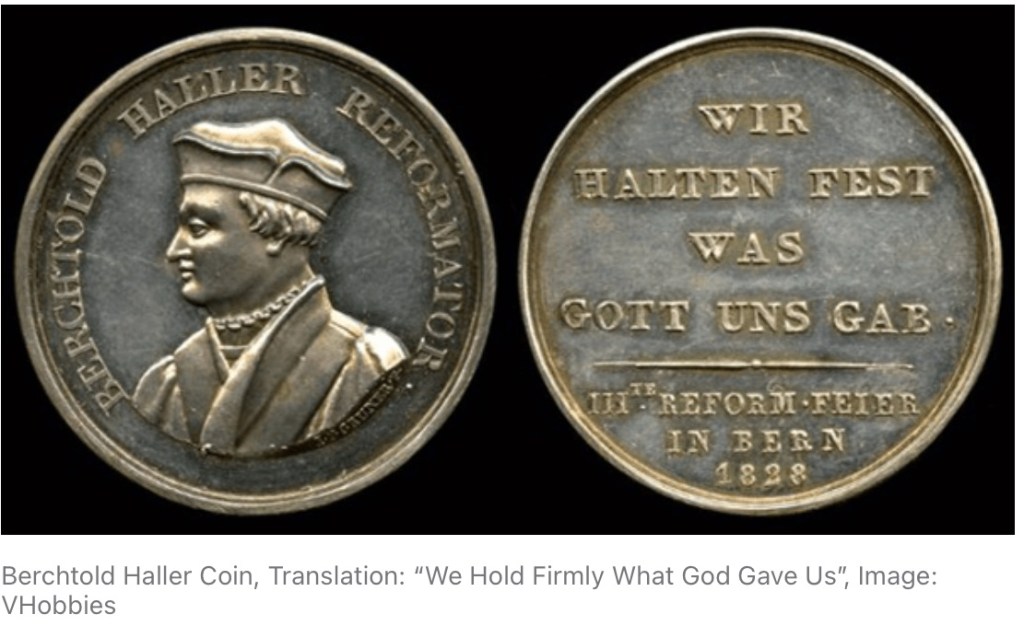
I’m surprised the list only numbered 10. The list was longer to be sure given that Luther had 95 problems in 1517 and the list did not decrease in the decade after he published his list. Key folks surrounding this creed include: Johannes Eck, Niklaus Manuel, Berchtold Haller, and Ulrich Zwingli.
WHY IS THIS CREDO IMPORTANT?
First, it outlines simply the differences between Protestants and Catholics.
Second, it begins the unfortunate pervasive attitude problem that Christians often talk about what we hate, are against, and protest rather than what we love, are for, and offer as God’s representatives.
TMB
 Dwelling In Scripture